


A money ritual is a short, repeated action you do on purpose to change how you relate to money. It might be a weekly ten-minute balance check with a candle lit, or writing one money fear on paper and tearing it up. This kind of practice does not make cash appear. Its real job is to turn avoidance into attention, so the patterns behind your spending and saving finally become visible.
As of November 4, 2026, the next practical window for starting one is Mars entering Virgo on November 25, 2026. I check dates like this against the ephemeris tables at Astrodienst. An ephemeris is a table of where each planet sits on each day. I’ll explain below why timing can help, and why it is never the main ingredient.
What does a ritual around money actually do?
A ritual around money gives your nervous system a predictable container for a topic it usually avoids. The container is the point. Money brings up fear, shame and old family rules, and those feelings make people look away. This is a different approach from how to manifest money, which focuses on intention rather than repetition.
When you repeat the same small action at the same time, the brain starts to treat money as a known task instead of a threat. That shift is quiet. Nothing dramatic happens on day one, and this is different from what money manifestation promises to do.
Here is what I see a steady practice tend to support:
- Noticing. You see where money goes before you judge it.
- Naming. You put words to the feeling under a purchase, such as boredom, guilt or a wish to be cared for.
- Choosing. You make one small, deliberate decision instead of a reactive one.
I read money behavior through astrology, but I treat the chart as a mirror, not a promise. A birth chart, also called a natal chart, is a map of where the planets were at the moment you were born. It can describe your money temperament. It cannot override your circumstances, your income or your choices. You can read more about that stance on Selene Marsh’s approach to money patterns.
Why can’t I save money, even when I try?
Most people who cannot save are not careless. They are usually running an older money rule that once kept them safe. Saving fails when it fights that rule head-on.
Common rules I hear include “money is for spending before someone takes it,” “wanting more is greedy,” and “if I check my account, I’ll panic.” Each one made sense somewhere. A child who watched money vanish in a chaotic home may learn that spending fast is the only way to keep anything at all.
In astrology, the 2nd house is the part of the chart tied to money, possessions and self-worth. The 4th house covers home and family, which is where many of these rules start. I write more about that link in 2nd house astrology and your money values.
Saturn, the planet of limits, time and structure, shows when these rules get tested. When Saturn squares your natal Saturn, which happens around ages 21 to 22 and again around 36 to 37, the money habits you inherited often stop working. A square is a 90-degree angle between two points, and it signals friction that asks for change.
The Saturn return is when Saturn comes back to the exact place it held at your birth. It happens about every 29.5 years, with the first one between ages 27 and 30. Many readers tell me their saving struggles peaked right then. That does not mean the planets caused it. It means the timing gave them a frame for a pressure they already felt.
If fear sits under your saving trouble, scarcity mindset and Saturn’s role in money fear goes deeper on that pattern.
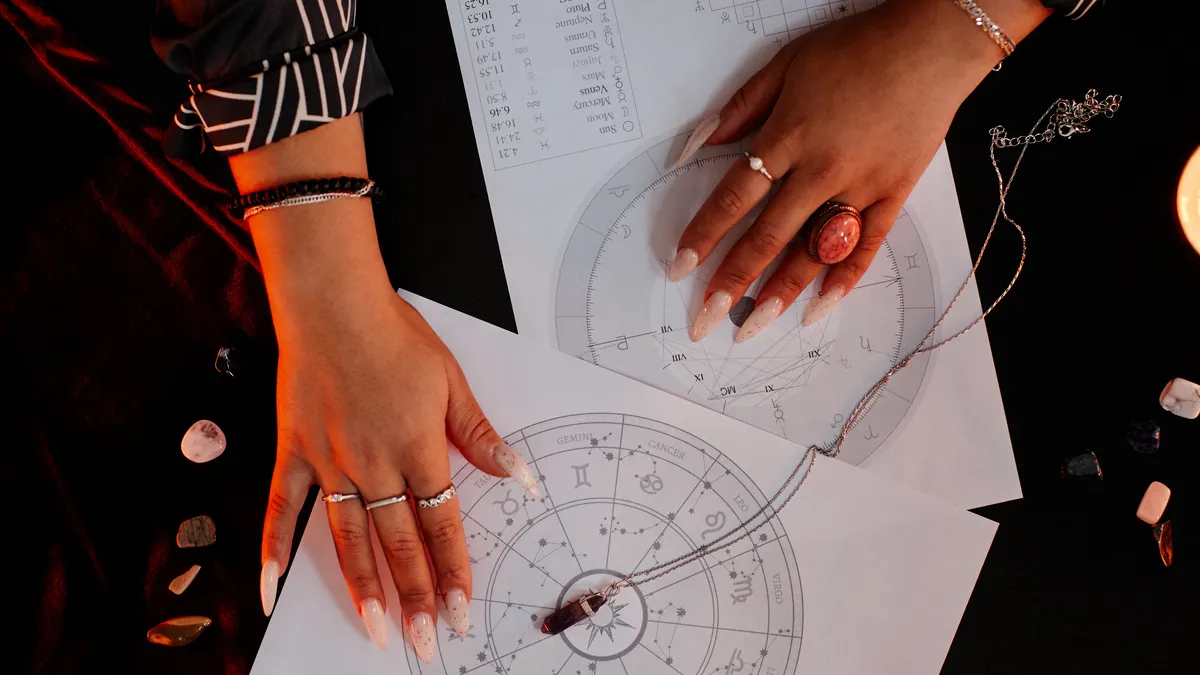
How do you do a money ritual by yourself at home?
A money ritual at home needs three things: a set time, a simple physical cue and one honest question. You do not need special tools, a teacher or anything you have to buy. The method below works alone, in a small apartment and on a tight budget.
Step 1: Pick a fixed time
Choose one slot you can keep, such as Sunday evening or the first morning of the month. Consistency matters more than length. Ten minutes kept every week beats an hour you skip.
Step 2: Set a physical cue
Light a candle, make the same tea or sit in the same chair. The cue tells your body that this is the safe money moment. Over time, the cue alone can lower the dread.
Step 3: Look before you judge
Open your account or your receipts. Read the numbers out loud if you can. Your only task is to see, not to fix.
Step 4: Ask one question
Pick a single question for the week. Good ones include:
- Which purchase felt best, and why?
- Which purchase did I want to hide?
- Where did I feel scared about money this week?
Write the answer in one or two lines. Short answers are honest answers.
Step 5: Make one small, chosen move
This could be canceling one unused subscription, setting aside a symbolic amount you can afford, or simply deciding not to look at shopping apps on one night. Keep it tiny. The practice builds trust, and trust grows from promises you actually keep.
Step 6: Close with release
Write one fear on paper, then tear it up or fold it away. Some readers prefer to do this part with the moon, which I describe in the full moon money ritual for release. Never burn real cash. Burn or tear only a note you wrote.
What does a weekly money check-in look like in practice?
A weekly money check-in is the same home practice, repeated on a seven-day rhythm so the habit becomes automatic. The 6th house in astrology governs daily work and health routines, and I think of weekly money care as a 6th house practice. It is maintenance, not magic.
Here is an example from a composite of patterns readers describe. Dana, 36, feels sick every time her banking app opens. She sets Sunday at 7 p.m., lights one candle and reads her last seven days of spending aloud.
In week one, she just looks and writes “I feel scared.” In week three, she notices most of her late-night orders follow hard calls with her mother. In week six, she moves her phone charger out of the bedroom. None of this is about willpower. It is about seeing a link she could not see while she was avoiding the numbers.
Dana is also in her Saturn square to natal Saturn range, around 36 to 37. I would read that as a season where old family money rules surface to be rewritten. The practice gives that pressure somewhere to go.

When is a good time to start, according to the planets?
Any day you are willing to look at your money is a good day to start. Planetary timing can add a theme or a nudge, but it should never become a reason to wait. Use the dates below as optional anchors, not deadlines.
Venus is the planet of value, pleasure and what we attract, so its sign changes color our relationship with money. Mars is the planet of drive and action. An ingress is the moment a planet moves into a new sign. Jupiter, the planet of growth and expansion, changes signs far less often, so its ingress marks a longer season.
| Date | Transit | Theme for your practice |
|---|---|---|
| November 25, 2026 | Mars enters Virgo | Sorting receipts, fixing small leaks, building a practical routine |
| December 4, 2026 | Venus enters Scorpio | Shared money, debts, and what you owe or are owed (8th house themes) |
| January 7, 2027 | Venus enters Sagittarius | Questioning inherited beliefs about money and generosity |
| February 3, 2027 | Venus enters Capricorn | Long-range structure, a plan you can live with |
| May 14, 2027 | Venus enters Taurus and Mars enters Virgo | Comfort, steadiness and habits that feel good in the body |
| July 26, 2027 | Jupiter enters Virgo | A longer season that favors daily systems and careful tracking |
| September 13, 2027 | Venus enters Libra | Money in partnership, fairness and honest conversations |
| November 25, 2027 | Venus and Mars enter Capricorn | Commitment, follow-through and reviewing the year |
The 8th house, mentioned in the December row, covers shared resources such as loans, joint accounts and inheritance. If your money trouble lives in a relationship, that window can be a gentle time to write down what feels unbalanced. The 7th house, tied to partnership, echoes through the Libra row in September 2027.
Notice that Virgo appears in several rows. Mars enters Virgo twice in this span, and Jupiter arrives there in July 2027. I read that as a strong year for unglamorous money care: the weekly check-in, the honest spreadsheet, the canceled subscription.
Is a ritual with money good or bad?
A practice like this is neither good nor bad by itself. What matters is what it asks of you and who benefits from it. A practice that builds honesty and calm is healthy, and a practice that asks you to harm, pay or obey someone is not.
What the phrase can mean in other places
In Nigeria and parts of West Africa, this phrase often refers to something very different. It is commonly used for alleged occult rites said to trade someone’s safety or life for wealth. News coverage there often links the term to crime and fraud.
That is not what this page describes. No practice I teach or respect asks you to hurt anyone, keep dangerous secrets or hand over money to a stranger.
Readers also ask whether Ifa belongs in this category. Ifa is a Yoruba religious and divination tradition with its own priests, ethics and long history. It is not shorthand for get-rich rites, and it deserves to be understood on its own terms.
Faith and the Bible
Many Christians read Scripture as a warning against putting money above God. If faith is your frame, a practice of gratitude, honest review and giving can sit inside it. Questions about forgiveness or what your faith allows belong with your own pastor, elders or community, not with an astrologer.
Red flags to walk away from
Leave any practice that includes:
- A promise to double or multiply your money
- A request to send money, gifts or personal documents
- Pressure to keep it secret from people you trust
- Any act that could harm you or another person
- Fear-based threats if you stop
A healthy practice asks for your attention. It never asks for your safety.
Does money manifestation work, or is it wishful thinking?
Money manifestation is the idea that focused belief and intention can draw money toward you. I cannot tell you that thinking about money will make you earn it, and no honest writer can. What intention can do is change what you notice and what you are willing to try.
People who want to manifest money often sit with a vision board and feel stuck when nothing arrives. The missing piece is usually behavior. An intention like “I am safe with money” becomes useful only when it shapes a small action, such as opening the account you’ve been avoiding.
I think of manifestation as the first half of a practice. The second half is the look, the question and the small move. Without that second half, manifestation can turn into another form of avoidance.
There is also a shame trap here. If you believe your thoughts create your bank balance, then a hard month starts to feel like a personal failure. Money outcomes are shaped by wages, rent, health, family duty and luck. Your mindset is one factor, not the whole story.
If you want to work with the beliefs themselves, how to spot and rewrite your money story walks through that process step by step.
Should you take a money blocks quiz before you start?
A money blocks quiz can be a useful starting point if you treat the result as a question, not a label. Quizzes sort people into types such as “the avoider” or “the overspender.” They can help you name a pattern you already suspected.
The limit is that quizzes flatten you. You may avoid money at work and overspend at home, and no single type captures that. Your chart, especially the 2nd house and Saturn, can add texture a quiz misses.
I compare the two approaches in money archetype quizzes vs. 2nd house insight. Use whichever tool makes you curious instead of defensive. Then bring what you learn into your weekly check-in as that week’s question.
What if this practice brings up shame or fear?
Shame and fear are common when you first look at money on purpose. A rising wave of dread does not mean the practice is failing. It often means you are finally close to the feeling that has been running your choices.
When that happens, shrink the practice. Look at one day of spending instead of a week. Keep the candle lit and the question gentle: “What am I afraid will happen if I see this?”
If the fear is constant, affects sleep or shows up as panic, please reach out to a mental health professional or a trusted person. A practice like this is a support, not a treatment. I write about the emotional side of this in financial anxiety and money patterns.
Here is a reframe I give myself. Avoiding money is not a character flaw. It is a protective habit that once had a job. A small practice simply offers that habit a safer way to rest.
What makes a money ritual worth keeping?
A money ritual is worth keeping when it leaves you calmer and clearer, even on weeks the numbers are hard. Results to watch for are emotional first: less dread, faster recognition of triggers and more honest choices. Financial changes, if they come, follow from those slower shifts.
Ask yourself these questions after a month:
- Do I open my account with less panic than before?
- Can I name at least one emotional trigger for spending?
- Have I kept a small promise to myself more than once?
If the answer to any of these is yes, the practice is doing its work. If none are true, change the time, the cue or the question before you quit. Often the practice is sound and the setup just does not fit your life yet.
For more patterns like the ones above, browse the money pattern hub or start from the Why Money Leaves home page. Both gather the readings and letters I write about why money moves the way it does in a life.
If you want your own timing mapped against your chart, the Money Window Reading looks at when your planets favor this kind of steady money work.