
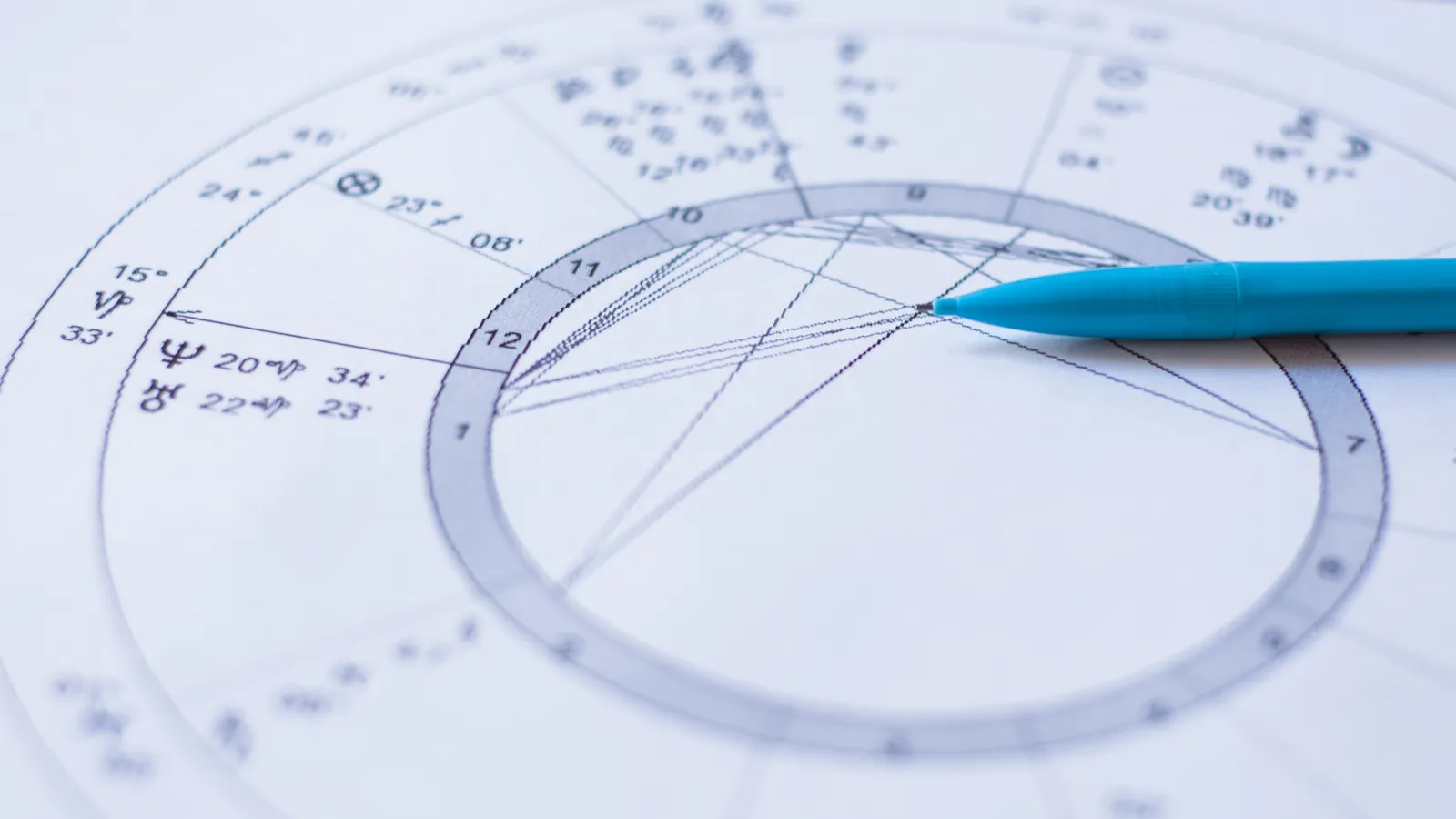
The part of fortune calculator is a tool that computes one specific point in your birth chart using three factors: your Ascendant, your Moon, and your Sun. You plug in your birth date, time, and location, and the calculator returns a sign and house placement. That placement is read as a marker of where ease around money and resources tends to show up, not a prediction of wealth.
As of October 7, 2026, interest in the part of fortune in birth chart work has grown alongside broader curiosity about money astrology. This piece walks through what the point means, how the math works, and how to read your own result without turning it into a guarantee.
What Is a Part of Fortune Calculator?
A part of fortune calculator is software that applies a fixed formula to three chart points and returns a degree, sign, and house. The term “Arabic Part” comes from medieval astrology, where dozens of these calculated points were used to answer specific life questions.
The part of fortune is the most commonly used of these points today. It sits in a chart the same way a planet does, meaning it has a sign and a house, but it is a mathematical point rather than a physical body.
Most calculators ask for your exact birth time because the Ascendant, one of the three inputs, shifts roughly one degree every four minutes. A birth certificate time is usually accurate enough. If you only have an approximate time, the house placement of your part of fortune may be unreliable even though the sign is often still usable.
How Do You Calculate the Part of Fortune in a Birth Chart?
The formula depends on whether you were born during the day or at night. For a day chart, meaning the Sun was above the horizon at birth, the formula is Ascendant plus Moon minus Sun.
For a night chart, the formula reverses: Ascendant plus Sun minus Moon. The Ascendant is the zodiac sign rising on the eastern horizon at the moment of birth. The Moon represents emotional needs and instinctive reactions, while the Sun represents core identity and will.
You rarely need to do this math by hand. A reliable ephemeris, such as the tables maintained at astro.com, lets you confirm planetary positions for your birth date and then apply the formula yourself if you want to double check an online calculator’s output.
Here is a simplified example. If your Ascendant is at 10 degrees Libra, your Moon is at 5 degrees Cancer, and your Sun is at 15 degrees Aries in a day chart, you add the Ascendant and Moon, then subtract the Sun, carrying the result into zodiac degrees. Small time-of-birth errors change this result, which is why precision matters more here than for Sun sign work.

Why Does the Part of Fortune Matter for Money Patterns?
The part of fortune does not indicate how much money a person will have. It points to an area of life where effort and reward tend to align with less friction, based on the interaction of identity, emotion, and circumstance at birth.
Reading this point through a money lens means asking what kind of activity or environment allows resources to flow with less resistance. A part of fortune in the 2nd house, the house of money and personal worth, often points to earning through direct skill or steady accumulation rather than windfalls.
This is where chart reading becomes useful without becoming a promise. On the money patterns hub, the part of fortune is treated as one data point among many, alongside placements like Venus and Saturn, rather than a standalone verdict on financial outcome.
What Do the Houses and Signs of the Part of Fortune Mean?
A house in astrology is one of twelve life areas a chart is divided into, based on the time and place of birth. The sign your part of fortune falls in colors how that house’s theme expresses itself.
Someone with a 6th house part of fortune, the house of daily work and routines, may find that consistent, structured labor produces more ease than sporadic big swings. A 10th house placement, tied to career and public role, often shows up as financial stability tracking closely with professional reputation.
| House | Core Theme | Money Pattern Often Described |
|---|---|---|
| 2nd | Money and personal worth | Steady earning tied to self-value and direct skill |
| 4th | Home and family | Financial ease connected to property or family resources |
| 6th | Daily work and routines | Stability built through consistent labor and health habits |
| 7th | Partnership | Resources often improve through collaboration or marriage |
| 8th | Shared resources | Ease around joint accounts, inheritance, or debt management |
| 10th | Career and public role | Financial standing tracks closely with professional reputation |
These six houses are the ones most often discussed in money-focused readings, though a part of fortune can technically land in any of the twelve. For a broader look at how placements combine into a full money personality, the money personality quiz walks through several factors at once.

When Should You Check Your Part of Fortune for Timing?
The part of fortune itself is a fixed natal point, but transiting planets moving over it can mark periods worth noticing. Transits are the ongoing movements of planets in the sky compared against your unchanging birth chart.
For example, Jupiter enters Virgo on July 27, 2027, and anyone with natal placements in Virgo may feel that shift as expansion in daily work or routine. Later, Venus enters Scorpio on October 9, 2027, which can highlight themes of shared resources for people with planets in that sign.
These windows are not guarantees of financial change. They are better understood as periods when a theme already present in the chart becomes more active or more noticeable in daily life.
Saturn’s cycle offers a longer example of this kind of timing. Saturn returns to its natal position roughly every 29.5 years, with the first return landing between ages 27 and 30, often bringing a reckoning with structures built earlier in adulthood. When Saturn squares your natal Saturn, which happens around ages 21 and 36, old financial habits frequently get tested rather than rewarded automatically.
Should You Trust an Online Part of Fortune Calculator?
A calculator is only as accurate as the birth data entered into it. Correct birth time, date, and location matter more for this point than for almost any other chart calculation, because the Ascendant input is time-sensitive by design.
If two calculators give you different results, check whether they are using the day or night formula correctly, since Sun chart calculators sometimes apply this inconsistently. Cross-referencing with an ephemeris at astro.com or a professional reading can resolve discrepancies.
No calculator can tell you whether you will earn money, keep it, or lose it. What it can offer is a single descriptive point to consider alongside the rest of your chart, the same way Selene Marsh reads it in client work: as context, not as a verdict.
How Does the Part of Fortune Fit Into a Full Money Reading?
The part of fortune works best as one piece of a larger picture rather than a standalone answer. Venus, Saturn, and the 2nd house all carry weight in how a person relates to money, and the part of fortune adds a layer about where ease specifically tends to show up.
Someone might have a part of fortune in the 8th house, suggesting ease around shared resources, while also carrying a Saturn placement that describes caution around debt. Both pieces matter, and neither cancels the other out. For a deeper look at how these patterns connect to broader questions of financial stability, the piece on financial freedom and birth chart money patterns covers how multiple placements work together.
Starting with a single calculator result is reasonable. Treating it as the whole story usually leads to disappointment, because no single point in a chart carries that much weight on its own.
What Should You Do With Your Part of Fortune Result?
Once you have your sign and house, the most useful next step is observation rather than action. Notice whether the themes of that house already show up as places where effort meets less resistance in your financial life.
If your part of fortune sits in the 7th house, for instance, pay attention to whether financial ease has historically shown up through partnerships, business or personal. That pattern, if present, is information you can work with consciously rather than a fixed outcome you are owed.
Astrology describes tendencies and timing, not certainties. “The chart shows pattern, not fate,” is how Selene Marsh describes this kind of reading. Checking your part of fortune on the home page calculator or elsewhere is a starting point for noticing, not a financial plan.
Selene’s readings by email go deeper into how your part of fortune interacts with the rest of your chart.