


An abundance mindset is the steady belief that there is enough money, time, opportunity and care for you to act from choice instead of panic. It does not mean ignoring bills or pretending you are rich. It means your spending, saving and asking stop being run by a constant alarm. At first the money stays the same. What changes is the feeling that decides what you do with it.
As of November 8, 2026, this guide covers what the idea means, where it falls short, how scarcity forms, and which planetary timing through 2027 can frame the work. I read money behavior through astrology, as described on Selene Marsh’s about page. You do not need your chart to use most of what follows.
Nothing here is financial advice. No chart, mantra or mindset guarantees income.
What is an abundance mindset?
An abundance mindset is a way of reading situations that assumes resources can grow, be shared and be found again. Stephen Covey made the idea popular in The 7 Habits of Highly Effective People, where he set an abundance mentality against a scarcity mentality. The core idea is simple. There is room for more than one person to do well.
In money terms, the focus moves from fear of loss to a search for options. That shift sounds small. In practice it changes how you open a bank app, how you price your work, and how you react when a friend gets a raise.
What does an abundance mindset look like day to day?
These everyday signs tend to show up when the alarm is quieter:
- You can check your balance without needing to brace first.
- You can feel glad for someone else’s win without a sinking feeling.
- You can decline a purchase without feeling deprived, and make one without guilt.
- You can ask for a fair rate and survive hearing no.
- You plan for loss without expecting it every day.
None of these signs require a large income. People with modest incomes can feel steady. People with high incomes can live in constant fear.
What an abundance mindset is not
It is not a promise that thinking positively will bring money, and it does not replace learning how to manifest money in practical terms. It is not a test you fail every time you feel afraid. And it is not a reason to skip the dull work of knowing your numbers.
How is scarcity thinking different from abundance thinking?
Scarcity thinking narrows attention to what is missing right now. Abundance thinking widens attention to include options, time and other people. Both are normal human responses, and each makes sense in some setting.
| Money moment | Scarcity response | Abundance response |
|---|---|---|
| Checking your balance | Avoids it, or checks it compulsively | Looks at it on a set day, then moves on |
| A friend earns more | Feels it as a personal loss | Feels some envy, then curiosity |
| Pricing your work | Undercharges to avoid rejection | Names a fair rate and tolerates a no |
| An unexpected bill | Freezes or spends to self-soothe | Feels the fear, then takes one practical step |
| A small treat | Either forbids it or binges on it | Chooses it on purpose, without guilt |
Scarcity thinking is not stupid. Under real pressure the mind focuses on the gap, because the gap is urgent. The trouble starts when that focus keeps running long after the emergency ends.
Is a poverty mindset a fair label?
The phrase poverty mindset often blames people for circumstances they did not choose. Real scarcity is a resource problem first. When rent takes most of a paycheck, careful and anxious thinking is a sensible reaction.
A more useful question is this: which of my money fears match my present, and which belong to an older chapter? Some fears are accurate warnings. Others are echoes. This guide to scarcity, Saturn and money fear goes deeper into how to tell the two apart.
Why does money fear feel so stubborn?
Money fear often feels stubborn because it was learned early, at an age when you had no control over the household budget. A child who heard a tense warning about what the family could not afford learns the tone before the meaning. The body remembers the tone.
That is why so much money behavior is emotional behavior in disguise. Overspending can be a way to feel briefly safe or chosen. Hoarding can be a way to feel protected. Avoiding statements can be a way to keep shame out of the room.
Each pattern did a job once. Shaming yourself for the pattern rarely loosens it. Naming the job it did usually works better. If the fear feels physical, with a tight chest or a racing mind, this piece on financial anxiety and money patterns may help you sort out what you are feeling.
What does your birth chart say about scarcity and plenty?
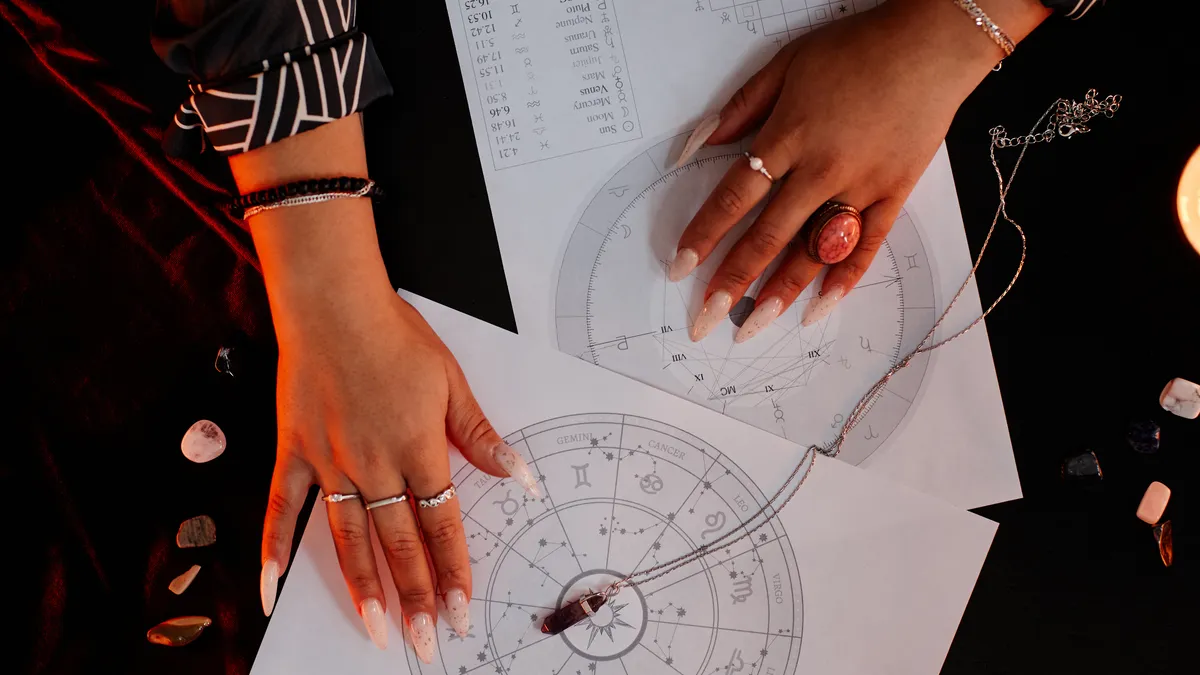
A birth chart is a map of where the planets were at the moment you were born, and astrologers read it for patterns, not fixed fate. Money patterns usually show up through the 2nd house, Saturn, Venus and Jupiter. A chart describes tendencies. It does not decide what you earn.
The 2nd house is the part of the chart linked to money, possessions and self-worth. Planets placed there color how you earn, spend and value yourself. The 8th house covers shared resources such as debt, inheritance and a partner’s money. The 6th house rules daily work and routines.
Saturn is the planet of limits, time and responsibility. Venus is the planet of value, pleasure and what you find worth having. Jupiter is the planet of growth, generosity and sometimes excess.
How these placements can show up
Saturn in the 2nd house often shows up as money that feels earned only through effort. People with this placement may build slowly and well, yet still feel they never have enough. The fear is real, but it is not proof of failure.
Venus in Capricorn can mean security matters more than pleasure. Small treats may feel risky or wasteful. Jupiter in the 2nd house can bring generosity and optimism, along with a habit of overextending when life feels good.
None of these placements is bad. Each describes a style. This guide to 2nd house astrology walks through the house sign by sign.
When do money stories tend to shift?
Money stories tend to loosen at predictable points in the Saturn cycle, when life asks you to update rules you absorbed earlier. A transit is a planet’s current position making an angle to a point in your birth chart. Some angles bring pressure, and pressure often brings change.
A square is a 90-degree angle that creates tension and pushes toward action. An opposition is a 180-degree angle that shows you a pattern through contrast. A Saturn return is when Saturn comes back to the place it held at your birth, about every 29.5 years.
When Saturn squares your natal Saturn, which happens around ages 21 to 22 and again at 36 to 37, the money rules you inherited get tested against adult life. Many people at those ages notice that an old family script no longer fits. Others notice the script fits too well and want to change it.
Saturn and Jupiter ages to watch
- Around age 7: the first Saturn square, often when early money messages first take hold.
- Around ages 14 to 15: the first Saturn opposition, which brings awareness of what peers have.
- Around ages 21 to 22: the second square, which brings first real independence and first real bills.
- Ages 27 to 30: the first Saturn return, when many people rebuild their relationship with work and worth.
- Around ages 36 to 37: the next square, which brings a mid-course check on the structure you built.
- Around ages 44 to 45: the second opposition, which can show what the earlier plan cost.
- Around ages 51 to 52: the final square before the second return.
- Ages 57 to 60: the second Saturn return, which often prompts a review of security and legacy.
A Jupiter return happens when Jupiter comes back to its birth position, about every 11.9 years. That puts the returns near ages 12, 24, 36, 48 and 60. These periods often bring a wider view of what is possible. Some people feel more willing to take a chance.
You can use these ages as reflection points, not deadlines. This guide to rewriting your money story offers prompts for any of them.
What do the Venus, Mars and Jupiter dates in 2026 and 2027 mean for money habits?
The planetary dates below mark when Venus, Mars and Jupiter change signs between late 2026 and late 2027. An ingress is the moment a planet moves into a new sign, which shifts the tone of that planet’s themes. Read these as moods to work with, not events that will happen to you.
The six dates in this table come from standard positions you can check in the ephemeris tables at Astro.com. Mars enters Virgo on November 25, 2026, and the year runs from there.
| Date | Event | Money theme to reflect on |
|---|---|---|
| November 25, 2026 | Mars enters Virgo | Effort goes into fixing systems, budgets and routines |
| December 4, 2026 | Venus enters Scorpio | Trust, shared money and what you feel you owe others |
| February 3, 2027 | Venus enters Capricorn | Slow value, long-term worth and fear of indulgence |
| May 14, 2027 | Venus enters Taurus | Comfort, pleasure and feeling safe with what you have |
| July 26, 2027 | Jupiter enters Virgo | Growth through details, daily work and steady habits |
| September 13, 2027 | Venus enters Libra | Fairness in exchange, pricing and give and take with partners |
How to use these windows
Venus in Scorpio, from December 4, 2026, tends to raise feelings about debt, gifts and who holds the purse in a relationship. Venus is considered less at ease in Scorpio, so old feelings about money and power may come up. A useful question for that stretch: where do I give to feel safe, and where do I give freely?
Venus in Taurus, from May 14, 2027, puts Venus in a sign it rules. Taurus is also the sign naturally tied to the 2nd house. Many people find it easier then to enjoy what they already have, which is the heart of a sense of enough.
Jupiter in Virgo, from July 26, 2027, links growth to the 6th house themes of daily work and routines. The lesson is modest. Plenty often comes from showing up to small tasks. A weekly check-in suits this stretch well, and this weekly money ritual guide offers simple ways to start.
How to build a steadier sense of enough with money
A steadier sense of enough comes from small, repeated contact with money, not from one big change in belief. The steps below are practices, not rules. Pick one and stay with it for a few weeks before you add another.
Name the alarm before you act
When you feel the urge to spend, hoard or avoid, pause and name the feeling in one word. Afraid. Lonely. Ashamed. Bored. A named feeling has a little less control than an unnamed one.
Look at your numbers on a set day
Choose one day a week to open your accounts. Look, write down one observation, and close the app. Regular contact lowers the dread that comes from not knowing.
Separate needs from soothing
Some spending meets a need. Some spending soothes a feeling. Both are human, so the aim is not to stop all soothing. The aim is to notice which one you are doing and choose it.
Keep an already-enough list
Write down five things you have that you once wanted. A coat, a quiet morning, a skill, a friend who answers. This trains attention to widen, which is the actual skill behind abundance thinking.
Practice receiving
Many people with scarcity patterns struggle more to receive than to give. Accept a compliment without arguing. Let someone pay for coffee. Ask for the rate you researched. Receiving is a muscle.
Respect real limits
Abundance thinking does not override a real shortfall. If the numbers are tight, the numbers are tight. You can respect a limit and still refuse the story that you are a failure for having one.
Do abundance affirmations help?
Abundance affirmations can help when they are believable to the person saying them, and they can backfire when they feel like a lie. If you tell yourself money flows easily while staring at an overdraft notice, part of your mind argues back. That argument can deepen the fear.
Grounded affirmations work better for most people. They describe a next step, not a final state. Some examples:
- I can look at my balance today and stay calm enough to read it.
- I am allowed to want more and still value what I have.
- One money decision today can come from choice, not panic.
- My worth is not the number in my account.
- I can ask for what is fair and handle the answer.
Say one aloud, then notice your body. If your shoulders drop, keep it. If they tighten, make it smaller and more concrete. An affirmation is a tool for attention, not a spell.
Does abundance mindset work?
An abundance mindset can change how you make decisions, but on its own it cannot change your income, rent or debt. The useful answer sits between hype and dismissal. The approach works best as an emotional skill paired with practical action.
What it can do
It can lower panic-driven choices, like impulse buying after a bad day or freezing when a bill arrives. It can make it easier to ask, negotiate and collaborate. It can make room for pleasure without guilt, which often reduces bingeing.
What it cannot do
It cannot replace a budget, a plan or professional help with debt. It cannot fix low wages, high costs or unfair systems. And it cannot guarantee wealth, no matter how sincerely you practice it.
Signs a teaching has gone too far
Be wary of any teaching that says your debt is caused by bad vibes. Be wary of claims that one belief change will bring a set amount of money. Shame dressed up as spirituality is still shame.
Should you work with a money mindset coach?
A money mindset coach can be useful if you want structure and someone to keep you on track. Anyone can use the title, though, so it pays to look closely. A good fit respects your real limits and never promises a specific outcome.
Helpful signs include clear boundaries, no guaranteed income claims, and a willingness to refer you elsewhere. Money fear that affects your sleep, health or relationships may call for a licensed mental health professional. Decisions about debt, taxes or investing belong with a qualified financial professional.
Why Money Leaves takes a different route. The work here is written: readings and email letters that link your chart to the emotional meaning of your money habits. You can browse the money patterns library at your own pace, or start from the Why Money Leaves home page. If you have wondered whether your chart shows a natural earning style, this guide to your birth chart’s money clues is a good next read.
What is the most useful way to think about plenty?
The most useful way to think about plenty is as a relationship with enough, not a race toward more. Scarcity tells you that safety is always one purchase or one paycheck away. A steadier mindset lets you feel safe enough now to make the next good choice.
Your chart can show where that relationship formed and when it tends to come up for review. The ages in the Saturn cycle and the 2026 and 2027 sign changes give you moments to pause and look. The rest is small, repeated practice, done without shame.
If you want to see how these dates fall across your own chart, a Money Window Reading lays them out in writing.
why is an abundance mindset important?
It matters because it changes the feeling that decides what you do with money, not the money itself. When the constant alarm quiets down, you can check a balance, ask for a fair rate, or spend on purpose without guilt. Astrologically, placements like Saturn in the 2nd house tend to pair real effort with a lingering sense of not enough, so loosening that feeling can matter as much as the numbers.
how to develop an abundance mindset?
You develop it by practicing small, repeatable acts of choice instead of panic, like checking your balance on a set day or naming a fair rate and tolerating a no. It tends to build gradually, often easing around Saturn and Jupiter return ages when old money rules get tested. Naming which fears are current and which are echoes from an earlier chapter usually helps more than forcing positivity.
how to have abundance mindset?
You get there less by belief and more by practice, letting your spending and saving come from choice rather than a constant alarm. This often loosens at points like a Saturn square or return, when inherited money rules get re-examined under real life. Noticing which of your fears still fit your present, and which belong to an older chapter, tends to support the shift more than willpower alone.